Thursday, March 30, 2006

Suicide is Painless

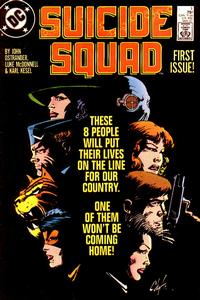
Back in the late 80s, when I was in high school and reading tons and tons of comic books, I never picked up Suicide Squad. I am not sure the exact reason, but I do remember seeing mention of Amanda Waller & Co. somewhere and never feeling particularly interested.

One of the great things about not reading particular titles when they are first released is that they will be there waiting for you whenever you may be ready. After reading some good reviews about this series over at CBR, I decided to track it down and picked up issues #1 through #20 from Lone Star Comics for well under a buck a pop.

After reading the first dozen or so issues I am pretty impressed. I have always been a fan of John Ostrander and his mixture of witty banter and consciously slow character development here is particularly strong. Right off the bat, I was much of a fan of the artwork by the team of McDonnell and Kesel, as it seemed so 'Generic Late 80s DC'. What really struck me was the weakness of the covers - with the exception of Chaykin's kick ass cover for #2 and the cool Deadshot cover for #6 - and the varying quality of the art on some of the characters. The squarehead look given to both Bronze Tiger and Colonel Flag looks like its out of a second tier fanzine.
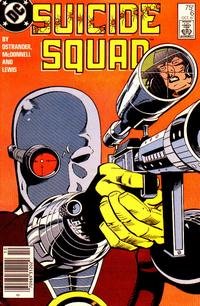
The cast of characters, for the most part is quite good - I find Flag's attempts to channel his inner Fury to be quite endearing. Of the villains, Ostrander seems to have the most fun with Captain Boomerang's 'French Quarter Cad' routine. As a sucker for all thing Charlton - it's great to see Nightshade back in action. On the downside, I am not sure where they are going with the 'Deadshot pulling his shots' bit, and I find the Enchantress to be a bit of a one note character. I hope they resolve both of those issues.

As for the stories, the first few issues are great as the reader gets to follow the Squad on its first few adventures. I must admit to feeling a bit lost at first, not having read the Secret Origins issue that is incessantly referenced in the editor's notes, but quickly got me bearings. I particularly liked the multi-issue sojourn to the Soviet Union as it has a real 'Remember the 80s?' Cold War vibe to it. The infiltration of Belle Reve by Batman was fun, but his whole vendetta against the Squad - which was revisited in the JLI issue - has not been explained to my satisfaction. I could have also lived without the Millennium issue. Back in the day, I went out of my way not to be millennium books as my relatively thin wallet was pissed at DC for interrupting our regularly scheduled programming. Funnily enough - I own a page of Norm Breyfogle art from the Millennium Detective Comics issue featuring Batman and Jim Corrigan.
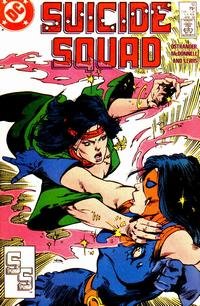
Overall the series is pretty consistently strong, thanks to Ostrander's strengths as a storyteller, and as I finished each issue I looked forward to picking up the next. I am even starting to better appreciate the artwork, which improved once Bob Lewis started on inks. I believe that much of the problem has to do with the quality (or lack thereof) of paper used by DC at the time, it pretty much kills most artwork. I am looking forward to finishing my run up to number 20, but I will reserve judgment about tracking down any more issues until then. At this stage, I am just happy to be reading some fresh stories that I missed the first time around for less money than they would have cost me at the time.

Monday, March 27, 2006

A Tale of Two Sergeants

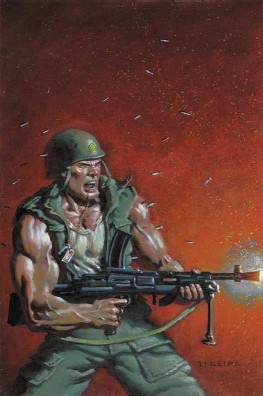
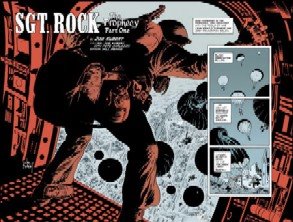
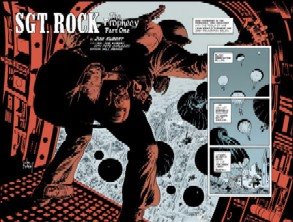
I was interested to see that both Marvel and DC have seen fit to publish a miniseries featuring their best known WW2 soldiers. I picked up Sgt Rock: The Prophecy #1, as I am always interested in seeing what Joe Kubert is up to. It was good enough to keep me going and I am now half way through the series, quite interested to see where it is going. The only real problem for me is that the central figure here – the character named David – interests me the least. The whole religious/spiritual angle is what is supposed to separate this tale from all other ‘Easy’ tales, but it’s just not doing much for me. What I am finding to be quite fascinating, however, is the portrayal of the fight for survival in the Balkans. The encounter with the Lithuanians was wonderful and the cliffhanger at the end of Chapter Two added a very sinister atmosphere to the story. It’s pretty impressive to see that Joe Kubert is still able to produce such a high quality comic book. His writing is quite good and his dialogue seems to have evolved with the times. All in all, it’s a pretty solid piece of work. At the halfway point, I’d give it a solid B.

On the other hand, we get Marvel’s Fury: Peacemaker – which tells the story of a man whose love for peace is so strong that he’s willing to fight for it. No, wait – wrong character. This book has a very different vibe to it that the DC miniseries, and deals with the pre-Howlers experiences of Nick Fury at the outset of America’s involvement in WW2. I was not at all impressed with the first issue, and had I not bought #1 and #2 together, I’m not sure that I would have continued. The purposed of issue #1 is to show that America was perhaps not quiet ready to enter the fray. This is illustrated by some of the most convoluted and difficult to follow storytelling that I’ve seen in a long time. To be fair, if the creators were trying to show the anarchy of war – they did a good job. I had to re-read page after page to make any sense of the action. Luckily, aside from the ridiculous cover, issue #2 is a vast improvement as we get to see a little something called character development. Fury hangs with a group of British soldiers deep behind enemy lines in North Africa. Garth Ennis’ script starts to make more sense and the storytelling slows down to a reasonable pace (although the action scenes are still tough to follow). The artwork by the team of Darick Robertson and Jimmy Palmiotti is very smooth and shiny – I’ll file it under ‘Quitely wannabe’. The greatest asset are the British chaps, none of whom carry an umbrella, as they ooze confidence and war weariness and help give the miniseries a kick in the ass. I was not impressed at first, but it’s growing on me and escapes with a C+.

Tuesday, March 21, 2006

Slam Evil: Chuck Dixon Style


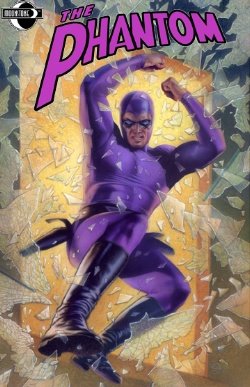
A few weeks ago, while scanning the racks of the latest issue of Jonah Hex, one cover really jumped out at me. It was from a Phantom series I’d never heard of by a publisher I never heard of. Feeling like trying something new – and feeling like it was my duty as a comic book fan to support a good cause, I picked it up. It was issue #9 of an ongoing series, but luckily the story was the beginning of a two-parter so I was in no danger of feeling lost.

The Phantom has a very peculiar track record as a comic book character. He is one of the oldest, and best known globally but has seemingly struggled to sell comics here in North America. There have, of course, been some great Phantom comics in the past – mostly notably runs by Jim Aparo and Don Newton for Charlton, but the Ghost Who Walks really hasn’t made much of an impression on the funnybook world in the past 30 years. This raises the question of whether a character who is described as ‘timeless’ is really just out of touch.

I am pleased to announce that, based on what I’ve read so far, the Moonstone series is full of promise. Issue #9, written by Chuck Dixon, deals with the illegal slave trade, and this setting really helps to set a sinister tone. This is a perfect backdrop for a Phantom adventure, and Dixon does a good job of balancing dialogue with action. Eric J’s artwork is uneven and some of the facial expressions are just a bit too distorted for my tastes. That being said, the cliffhanger ending has me anxious to read #10. Comics don't often have that effect on me these days.

Future writers would do well to study Dixon’s solution to dealing with a 21st Century Phantom: Have the Ghost That Walks deal with issues of the modern developing world.

Tuesday, March 07, 2006

My Hex Life Has Never Been Better

Ladies and Gentleman, for the first time in over 6 years - I have purchased 5 consecutives issues of an ongoing series.

That's right, aside from DC: New Frontier, I have not bought 5 issues of a title off the rack since the days of Sandman Mystery Theatre and Image-era Astro City. Well, all it took was a scarfaced gunslinger and I am back to handing my loonies over to my LCD. It's no secret that I think western are almost the perfect genre for funnybook, and this series has won me over big time. Let's look at what we've seen so far:

Jonah Hex #2
I love a good western tale that takes place in a corrupt town south of the border. The themes in seem to come right out of a Peckinpah western, and yet still seem fresh. Luke Ross' art is really growing on me.

Jonah Hex #3
Ok, this one shared some similarities with an early episode of Deadwood, but that can be forgiven as we are blessed with a Bat Lash appearance. Maybe we'll be luck enough to see a spin-off? Ok, but I can still dream. The Phil Noto cover was freakin' gorgeous.

Jonah Hex #4
I spotted the Chaykin cover on the rack from about 15 paces. This story of false accusations is probably the weakest of the lot so far, but still quite good.

Jonah Hex #5
Tony DeZuniga alert! This was a stroke of genius - almost as though they were reward us older fans for sticking with the earlier issues. What this proves is that a western can be handled by any type of artist (from Ross to DeZuniga). Dezuniga's pencils are very appropriate for this claustrophobic story.

Hell, these stories have been so good that I'll keep buying them as long as they keep printing them. I love the single issue stories. It actually rewards the reader for picking it up off the racks. So many titles today seem to be loss leaders for the TPB market. My fingers are crossed that sales are strong enough to warrant a long run.

Thursday, March 02, 2006

Join the Legion of Doom (Patrol fans)

I recently had a long-time customer on eBay tell me that he was really getting into the Doom Patrol and whether I had any comics for sale. I’ve got probably 75% of the original series, and this is a guy who is willing to pay a good price for comics, but I had to tell him that there was no way I was letting go of my babies.

So, what is it about the Doom Patrol that makes it such a great series? At first glance, DP looks like an ugly duckling when compared to its contemporaries at DC such as the staid long-running Superman and Batman titles and the stylish titles featuring revamped Golden Age characters.

I have also heard that Doom Patrol is more akin to Marvel books of the early 60s, mainly due to the mixture of in-fighting and outsider angst. I don’t really buy that as the storytelling and characters in Doom Patrol are far too fantastical and silly (for lack of a better word) to co-exist with the likes of Tony Stark and Reed Richards.

Once you scratch the surface, it quickly becomes apparent that the Doom Patrol’s greatest strength is that it is so different from other titles. In fact, the Doom Patrol should almost be allowed to exist in its own alternate universe, without regard to superhero norms. Of course, exceptions could be made, allowing for crossovers with the Challs or the occasional wedding.

So, how’s does such a strange little comic book pop up in the middle of the straightforward Silver Age? Well, I guess it all starts in Arnold Drake’s brain. I imagine that he may be the only person who has written both X-Men and Little Lulu. His strength here is that he was able to create interesting characters; each having a unique angle that prevents them from becoming merely recycled heroes.

Let’s look at Negative Man. He is the team’s nearly omnipotent member whose greatest weakness is a time fatal time constraint. By keeping his exploits to 60 seconds, the creators ensure that he does not overshadow the rest of the team. Rita’s powers have been used almost since the dawn of comic books – but her background as a Hollywood star is a great twist (or perhaps stretch). In a way, a celebrity becoming a freak reminds readers not to get too comfortable with the status quo. In Robotman, we get your typical Ben Grimm, man trapped inside a monster’s body gets through life by alternating between anger and comedy, but the real genius here is that we some pathos is developed through the back-up series in which we series Cliff Steele on the lam.

Of course, these odd heroes pales in comparison to their unbelievably wacky foes. It you were to assemble a Wacky Villains Hall of Fame. I would imagine the liked of Monsieur Mallah, Animal-Vegetable-Mineral Man and Mr. 103 would all be charter members. Finally, I have to mention Mento, Rita’s love interest who would have a tough time cracking the Justice League Antarctica line-up.

And yet, with all of this goofiness going on, the stories are still very engaging and a real pleasure to read. The artwork, mainly by Bruno Premiani, is absolutely perfect for the titles as it is loose and mildly abstract without ever being too over the top. It’s hard to think of another Silver Age artist who could have pulled this one off – although I would have liked to see Steve Ditko give it a try.
Anyway, that’s my attempt to put my finger on what makes Doom Patrol such a fun read. If you’ve never tried the book, I suggest picking up an issue or two. Try browsing eBay, where lower grades copies can be found for peanuts.

Tuesday, February 28, 2006

Dead of Winter DVD Reviews

Corpse Bride
A very fun little film. Burton and crew are able to create a beautifully haunting atmosphere. I really enjoy seeing non-Pixar animation. The characters have such life – of course, this is greatly helped by the perfect casting, especially Albert Finney and Christopher Lee. It’s a bit more accessible that Nightmare Before Christmas and is therefore probably more fun for the whole family. Did I just say that?

Serenity
I never watched Firefly. Heck, I’ve only seen a handful of Buffys, but I love, loved, loved this movie. I wish all movies were like this. I was totally sold on the characters. I was on the edge of my seat the entire bloody time. I felt like I was a 5-year watching Star Wars for the first time again. Damn, I wish it had made enough money to warrant a sequel.

The Constant Gardener
This is another film that should have made a more money. I do like the fact that it was set in an actual African nation (gotta give props to Sahara for its Mali setting too), and it (Kenya) does not come out looking too good. Neither do the British government nor Canadian Pharmaceutical Companies for that matter. People are going on and on about Rachel Wiesz’s performance, but for me, the long, quiet desperation portrayed by Fiennes was the best performance I’ve seen in ages.

Red Eye
Wes Craven starts to show his inner Hitchcock, in taut and economical (80 minutes?) thriller. It was much more sophisticated that I was expecting. The leads provide very strong performances except, surprisingly, for a somnambulistic Brian Cox. Perhaps most impressive is the opening act which perfectly portrays the airport experience. It’s nice to see that a great thriller can be made for under $100 Million.

Friday, February 17, 2006

Rio: Twisting Through a Dusty Land

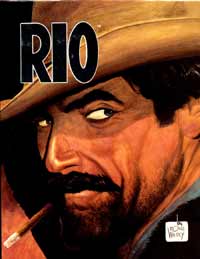
After a great discussion about Doug Wildey’s artwork over at CBR – I redoubled my efforts to track down a copy of Rio. Luck was with me, as I searched through a local bookstore that has a good selection of old comics and lo and behold – there sat a wonderful hardcover copy of Rio. Apparently, a limited run of 1,500 were printed and signed by Wildey himself. This was the kind of find that keeps a comic book fan like me happy.

I was really looking forward to reading it, but with a 10-week old baby at home, my time for funnybooks has been extremely limited. I read the first couple of pages while eating my breakfast cereal one morning this week. I dashed off to work leaving it on the dining room table. I return home that evening to find my wife sitting on the couch reading Rio. Keep in mind, our house is full of comics – there is one at every turn and I never, ever see her reading them. It was nice to actually get Kat’s view of a comic book before I’d read it. She said she thought it was great – and had actually put it down earlier but came back to it to see how it ended.

What can I say about this book? It is definitely everything that a comic book can be. The fact that it is a western makes it even sweeter. Westerns really weren’t a big thing when I was a young comic book fan – the genre had run its course in most media. That turned out to be a blessing in disguise as I have been able to discover just how perfect western stories fit into the comic book medium.

Wildey is best known for creation Jonny Quest, but he has a very impressive body of work in comic books as well. He worked for many different publishers and excelled in most genres. Rio is obviously a very personal work by a creator at the height of his powers. The look of this book owed more to John Ford’s ‘Monument Valley’ films than it does to the western comics of the 50s, as Wildey’s layout have an impressive cinematic feel to them. The plot, however, owes much more to the anti-hero works of the 70s such as Jonah Hex and Outlaw Josey Wales. Rio is a compelling figure and he is trying to figure out a world that is deeply entrenched in a mixture of greed and apathy.

For my money, the best westerns are those that explore some of the black eyes of American history. The extinction of the buffalo certainly fits the mold. Wildey explores the issue through the eyes of an outsider and is able to show the perspectives of the profiteer, the military and the Native American. The narrative is very tights and flows beautifully.

The artwork is even stronger, and Wildey’s talent as a painter is apparent. The sequence in which Rio forced into the ‘Chase’ is brilliant, pure and simple and should be shown to anyone trying to figure out what a comic book should look like.

There are other chapters in the Rio saga, published by different companies and it would be great if they could be collected in a single volume one day.

This is as good as comics get.

Wednesday, February 01, 2006

Essential Defenders: 70s Schizophrenia from Marvel

First, let me state that when I first saw the Essentials line on the shelves way back when (more than 10 years ago now?), my comic book snob alter ego kicked in and I thought that it would be a cold day in hell before I every bought a cheap package of black and white reprints. I was a real back issue snob, and thought that the Essentials format was a travesty.

I eventually came to my sense and realized just how wrong I was. It's a wonderful format for reading a stack of back issues that I've neither the time or money to go about collecting. I won't likely ever buy certain Essential volumes (like Captain America, Howard the Duck or Silver Surfer) since I've already got most of the back issues, or even Fantastic Four or Amazing Spider-Men as I have deemed those early issues worthy of having in a Masterworks format. For me, the Essentials line is perfect for collecting series that I wouldn't otherwise read. My earliest purchases were Tomb of Dracula Vol. 1 and Ant-Man. I was great fun reading these volumes and I have since picked up more of the Essentials line over the years.

I was given the Essential Defenders for Christmas and I was thrilled to dig into it, since I haven't read any of the earliest issues and I knew that some interesting writers and artists worked on the title. When I was a young comic book reader, the Defenders always got a bad rap simply because they weren't the JLA or the Avengers. My comic book peers didn't seem to realize how it was interesting to see how a group of second-tier heroes interacted and dealt with threats to Earth. I have very fond memories of reading and re-reading the 100th anniversary issue, which made me a fan of the Silver Surfer for life.

I have to admit that I have to give this Volume 1 a fairly mixed reviews, as it comes across (like so many post-1970 Marvel titles) as extremely schizophrenic. Here goes nothing:

The Good
  1. The introduction of Valkyrie really added a lot to the team and the title. Making her a permanent fixture in the Marvel Universe (from her initial temporary existence from Avengers #83) was handled well and was very creative.
  2. The issues featuring the Squadron Sinister (and the Extreme Makeover of Nighthawk) was great, and far superior to the Avengers issues.
  3. The art is consistently good (which is rare for a Marvel book in the 70s). Nice stuff from the Andru/Everett team and just about any of the inkers seems to be a good fit for Sal Buscema's pencils.

The Bad

  1. Part of it is personal, as two of the key members (Dr. Strange and Sub-Mariner) were never my favourite Marvel heroes.
  2. Another aspect of the book (especially the earliest issues), is that they are too full of the mysticism that seemed to be all the rage in Bronze Age Marvel books. All of the interdimensional demon stuff has never been my cup of tea (that's probably why I've never really connected with Dr. Strange.
  3. I could have lived without the pre-Marvel Feature issues. While I realize they explain how the 3 core characters first hooked up - they felt disjointed and really suffered from what I mentioned in #2 above.
  4. After all of the great things I've heard, the Avenger/Defenders war was quite a let down.

The Ugly

  1. The production quality is variable, some of the reprinted pages are quite murky and one of the cover reprints barely fit onto the page. The binding on this volume does, however, hold together better than some of the other Essential books (hello Iron Fist).

Tuesday, January 31, 2006

Quick Book Reviews


I got a few books for Christmas, but with a newborn at home I didn't exactly plow through them. If it weren't for my streetcar ride to and from work, I don't know when I'd find the time.
The March - E.L. Doctorow

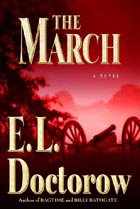
To me, Doctorow is the Terence Malick of American fiction. His writing has a dream-like quality, and the words wash over you like a wave. Although ostensibly about Sherman's march through Georgia, this book is really about how people respond to anarchy. The cast of characters is varied, and each one finds a way to survive amidst the chaos. The best and worst of people can be seen. What I found most amazing, was the sense of calm Doctorow is able to instill. You can almost hear the birds chirping as the exhausted soldiers drag their feet along a dirt road. This is great stuff, and I recommend it to anyone looking to anyone looking to take a langurous stroll through a well written novel.


Bury the Chains: Prophets and Rebels in the Fight to Free an Empire's Slaves - Adam Hochschild

This wonderful book by the author of the great King Leopold's Ghost sets out to examine the fight for the abolition of slavery in the British Empire. I have read a great deal on slavery and the slave trade, but I don't recall coming across any books dealing with the grassroots movement to first end the slave trade and then abolish slavery altogether. What Hoschchild is able to convey very early on in this book is that while history has seen many men fight for their own right, it was truly revolutionary to see men fighting for the rights of others. The author takes us from the shores of West Africa to English shipping towns to the plantations of the West Indies. He covers an incredible amount of ground in a mere 370 pages and manages to point out interesting details without ever getting bogged down by tagential discussion. When we think of the end of the slave trade and emancipation, we tend to think of fixed dates, and never really comtemplate just how long the journey it was for those fighting for the cause. Hoschchild demonstrates that is was the almost endless stream of petitions, boycotts and slave revolts (both failed and successful) that ultimately led to the Emancipation of British slaves. For anyone interested in learning more about this little known facet of history that touches Africa, Europe and America - I strongly recommend this book.

Saturday, January 21, 2006

Golden Oldies.

Listen, I love Frank Miller. I love his badass Dark Knight version of Batman. I like Mike Grell and his brooding Green Arrow working in a seedy Seattle. I also like modern twists on old characters, like what they did with Sandman Mystery Theater.

I like all that stuff - comics can be grim and gritty and come across like a
Tarantino movie and that's just fine.

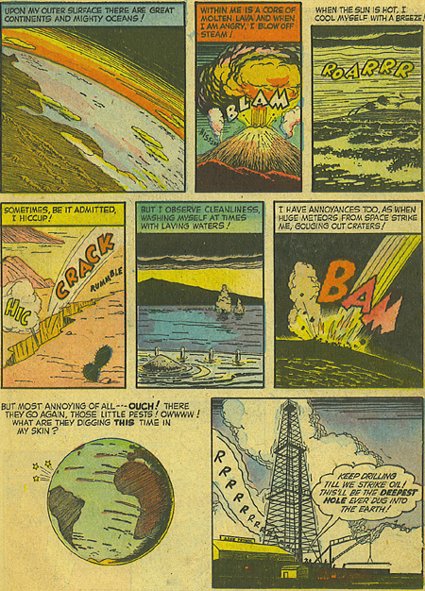
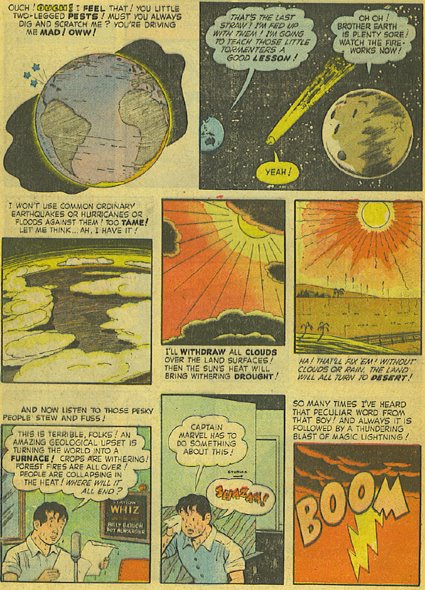
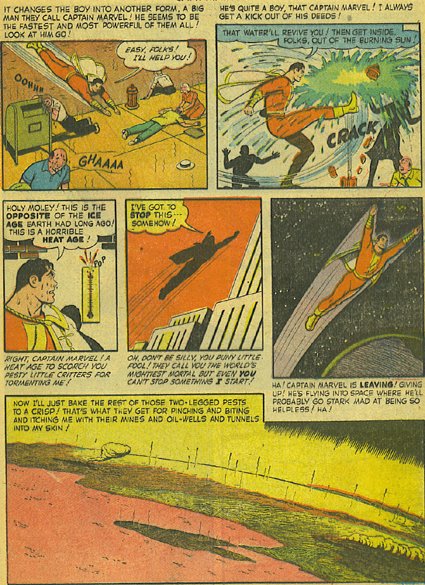
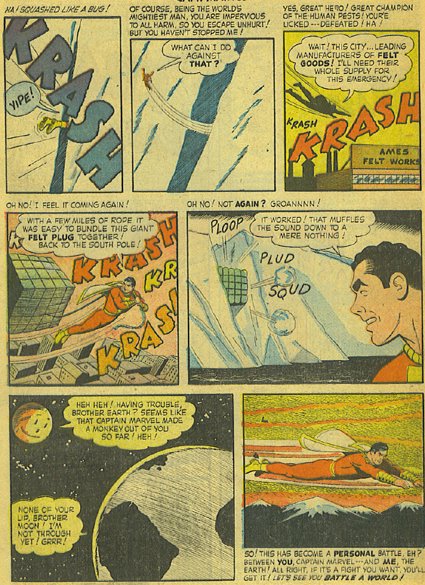
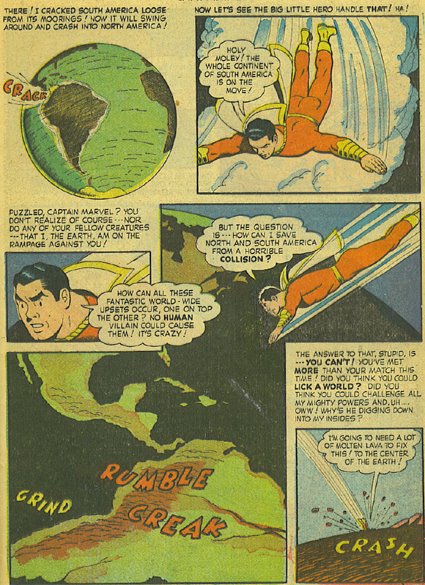
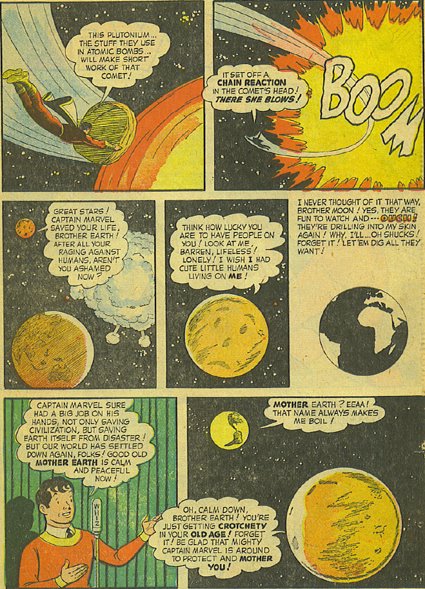
All of that being said - Golden Age books are great. They can shine in all of their goofy glory. Fawcett produc
ed some of the silliest, most family friendly stories on the market. If any hero could be accused of being milquetoast, it's the Big Red Cheese. Such cricism simply can't stick though, because the Marvel Family book are just so damned great.

Here is an example of a very inventive little story written by Otto Binder - one of the most unique talents ever to work in the funnybook business. Have a look at this stuff and think about how much creativity went into putting this one together. Today, many people might see it as simply being lame, but they are missing the whole point. There is more charm and creativity in these 10 pages, than you'll find in some entire series.

I believe there was a book published recently about Otto Binder. I'd be interested in picking that one up as the more I learn about the man, the more interested I become. I've never read any of his Adam Link stuff
(my only exposure being the Joe Orlando strip in Creepy), but I saw one at a local used book store and I may go back and grab it.

I am not sure of the best way to post numerous pictures on a blog, but this is the best way I could think of for the time being. Enjoy and please share any comments that you might have.


Tuesday, January 17, 2006

DVDos and DVDon'ts

40 Year-Old Virgin
I had heard and read so many good things about this movie, I guess disappointment was inevitable, but I didn’t think I’d be this disappointed. Much like Anchorman, this movie plays out more like a series of funny (and not so funny) scenes patched together with duct tape. Steve Carell and Catherine Keener do their best to rise above the material – but it is impossible as they are overwhelmed by the dominating frat house humor. Yes there are funny moments (the best scenes are simply with Carell and Keener), but they are few and far between. I cannot believe that the man behind Freaks and Geeks and the World’s Best Boss were responsible for this script, which seems to drop an F-bomb every 15 seconds. My expectations were much too high – but I am simply shocked that this movie received such rave reviews and was seen as so original and endearing. Grade: C+

Cincinnati Kid
Watched this one over the Christmas holidays. I love classic movies, but sometimes you are left wondering why some are seen as classics. This is a solid, serviceable movie. It has an ok script, and some decent poker scenes. Beyond showing a bit of the underbelly of New Orleans, Norman Jewison’s direction adds very little flair. Ann Margaret plays the vixen as if she has been parachuted in from her first day of acting classes. The saving grace is Edward G. Robinson – who manages to steal the movie from a nearly comatose Steven McQueen. Overall, it’s enjoyable but the comparisons to The Sting on the DVD case are a bit of a stretch. Grade: B

Rodger Dodger
I have been reluctant to rent this one, as I had a feeling that it may be just a little too misogynistic for me to sit through with Kat. I was wrong and I am glad that I was wrong. Over the Christmas holidays, we rented a big stack of DVDs and this was hands-down the best movie of the lot. Superb acting, kinetic direction and sharp dialogue make this movie bounce along at a nice clip. Movies like this prove that a small film with good writing and acting can be vastly more entertaining than a big budget extravaganza. I would have thought Campbell Scott might have received a few awards for his work here, but I guess the film was just a little too far below the radar. Grade: A

Beyond the Sea
How man who finally has the opportunity to put together his dream project after so many years could make such a bland film is beyond me. There is nothing really wrong with this film, but neither is there anything right with it. It comes across like a competent NBC Movie of the Week. Kevin Spacey looks ridiculous trying to court Kate Bosworth. Grade: C+

Monday, January 16, 2006

The Future is Invincible

The comic book industry is in the toilet.

Comic books are looking more and more like Maxim magazine.

Where have you gone, Sal Buscema?

These are all things that I have said or though in recent years. Over time, I have become less and less interested in handing over $3 or $4 for a story involving Pam Anderson wannabes that takes me 90 seconds to read. Although I have grown more and more cynical over time, every now and then I read a new comic book that renews my faith in the funnybook business.

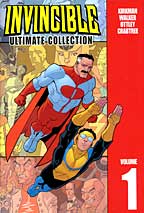
After a really, really lousy week – I came home to find a package from a comic book pal of mine from D.C. Inside was a hardcover edition of a book he had recommended: Invincible: Ultimate Collection Vol. 1.

There is nothing I like to do more on a Saturday morning, than to grab a cup of coffee and to sit down on my couch with a comic book. It’s become a little bit more challenging lately, with a newborn demanding a lot of my attention – but I still try to make time for the 4 Color world.

Although I am sure that I am the last person to jump on the bandwagon – I just want to say that for anyone who is looking for something new to try, this book is great. It features superb characterization, subdued but effective artwork and some great dialogue. At times, the story feels very Silver Age retro, but they are certain touches that help to establish that this book is indeed very modern.

Invincible helps to demonstrate that superhero books just might still have a future.

Thanks for the book, Ray!

Friday, December 30, 2005

Why Does Original Art Have to be so Pricey ????

I know, I know.

It's art, it's one of a kind, it's rare and it's cool and that is why it costs a lot.

I don't like that answer, because I want more and I want it now!

Everything was ok a few years back, I could pick up a nice interior page from just about any artist not named Kirby or Adams for under $100. That does not seem to be the case anymore. Back in 1999 and 2000, I bought quite a few Dick Dillin pages for $35-$40. Now, I rarely see one sell for under $125.

Where I really shot myself in the foot, however, was getting into the original cover art market. That's a whole new ballgame, folks!

Rawhide Kid is one of my all-time favourite titles and a couple of years ago, Heritage Comics was selling a bunch of original cover with Larry Lieber art. Now Larry's art does not excite many people, but I have alway enjoyed it and felt he infused a good mix or draftmanship and emotion. I end up winning an auction for the cover art to Rawhide Kid #90 - which is a great one as it features a crossover with Kid Colt in a scene right out of Butch Cassidy and the Sundance Kid. It is very cool. I have it framed and it is hanging on a wall at my house.

I can't remember exactly what I paid for it, but it was around $400. That may not seem like a lot compared to what Kirby, Adams and Ditko covers fetch - but it felt like a lot to the wallet and was certainly at least 4 times more than I'd spend on any art up to that point.

The problem is that now I want more covers - they are so great and look great framed and I must have more. There are two currently being auctioned by Heritage that have caught my eye.

The first is a nice Golden Age western cover for a Comics Media cover by Don Heck. Heck's horror covers for Comics Media are legendary, but his western ones are also very nice. This one features are sheriff getting shot in the back. And some people think the Code only impacted horror and crime books.

Heck is one of my favourite comic book artists ever - I have a couple of pages by him from much later in his career. One is from his stint on Justice League of America (his draws a nice Hawkman) and the other is from the DC horror anthology Ghosts. Both are nice but definitely unspectacular. I figure that this cover may end up being a bargain, since it is DC and Marvel artwork that really command the highest prices and I wouldn't be suprised if an early Silver Age Heck page from Tales of Suspense of The Avengers would sell for more than this cover. That being said, I think it will still end up north of my price limit. Too bad, because it is a beauty.

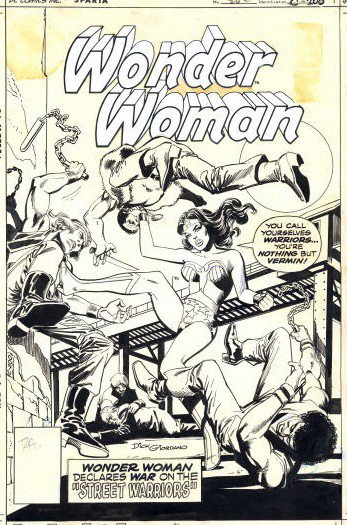
The second cover will likely sell for ever more, even though it was published 25 years later. People often think of Dick Giordano first as an editor, then as an inker and finally as a penciller. That is too bad, because Giordano is an excellent penciller and he design truly dynamic covers. During his pre-editorial days at Charlton, his covers shone like a diamond in the rought. Many of the covers he did for DC in the late 70s and early 80s are nearing icon status. All of that being said, Giordano artwork typically sells for far less than the artwork of many of his contemporaries.

This particular Wonder Woman cover appeals to me because I owned the book as a child. My parents would give me a certain amount of money to buy comics, but there always seem to be a little bit more money for bying books that my older sister might also enjoy. This is pretty much how my Wonder Woman collection got started - my inability to turn down free comics. It's a great action cover, and I want it now. Sadly, it will likely end up well above $1,000 and that's an expense I just can't justify right now.